
Welcome back, readers! The winter weather is here (the first snow in Vancouver today), and excitement for the holiday season is building. Why are the holidays so special for so many people? It is a time to reconnect with our family and friends, reflect on the lessons learned in the previous year, and explore the cultures that make us unique and beautiful from one another… like snowflakes. (Aside, learn about snowflakes here).
In our MALAT studies, my cohort and I are now in our 4th course and are exploring instructional design or how to create a curriculum and project manage the creation process. This week we are investigating the DESIGN CASE! The design case is an informal yet scholarly work whereby instructional designers reflect and unpack the entire process they experienced by creating and deploying a curriculum (Lawson, 2004).
The literature explains the purpose of a design case is to share a precedent (Boling, 2010). A precedent is a uniquely personal experience one gains by using a specific instructional design, and that new knowledge can inform future use (Oxman, 1994). Design cases, therefore, help others understand what designers exactly did in each circumstance and how future designers can balance these choices in future contexts. Lincoln & Guba (1985) remind us that this naturalistic inquiry is not to be generalized but rather understood. Therefore, design cases should include as much context as possible to help readers match the author’s choices with their circumstances. As a result, design cases encourage authors to take a leap of faith (Cross, 2007) and accept the bias created by their lived experiences (culture). The challenge is to disclose the factors of the decision-making process as best as possible (Bruce Archer, 1965) because it isn’t easy to articulate our tacit beliefs! (Cox & Osguthorpe, 2003; Rowland, 1992).
In preparing to write our design case for assignment 2, this week’s blog asks us to reflect on the tools we currently use in our workplace and articulate a superpower or talent that helps us apply these tools effectively. By exploring our relationship with instructional design with a criticality for our bias in a very phased, Vygotskian manner, our professors are helping prepare us for the next assignment.
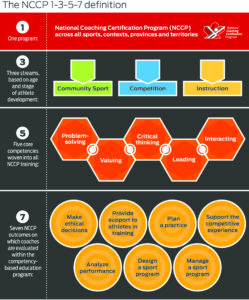 As an NCCP master coach developer responsible for helping club and performance coaches achieve certification and preparing coach developers to lead workshops and debrief calls, I use various instructional design tools. I prefer to begin using a large whiteboard in the office that invites colleagues and stakeholders to articulate and connect ideas for the first time. Products like Powerpoint and fillable PDFs provide guidance for new workshop facilitators and coaches in training and encourage the most critical aspect of coach development, speaking and writing. We also employ a learning management system, google sheet templates and articulate 360 for step-by-step instructional theory. We often use a blended learning method that introduces theory concepts during on-demand modules and facilitated breakout rooms. Outdoor, interactive workshops and applications follow to help pattern new knowledge. Mentorship includes weekly video calls, outsourcing, and lots of prototyping. As a result, I aim to role-model and invite coaches to be creative and comfortable with a hybrid of AGILE and ADDIE instructional design (see last week’s Assignment 1 post) to keep trying new things until the ‘spaghetti sticks on the wall.’
Therefore, I fulfill the roles of facilitator, designer, narrator, demonstrator, informed by my recent experience as a student and coach in training. I have capitalized on my organizational superpowers throughout recent professional development to optimize resources (spreadsheets, documents) and help participants focus on the important stuff, speaking and writing. I also have focused on improving my public speaking abilities to use tone, word choice carefully, and body language to invite and engage audience members in a journey of discovery rather than a story to absorb passively.
This week’s readings about design cases remind authors to embrace their lived experiences and bias and use them as a superpower to propel engagement and defer the decision-making process to the next designer.
This concept matches nicely with the excitement for the holiday season, where we again are awarded the opportunity to reconnect with those who helped formulate our constitutions and propel us into the next annum’s adventures.
References
Archer, B. (1965). Systematic method for designers. London, UK: The Design Council.
Boling, E. (2010). The Need for Design Cases: Disseminating Design Knowledge. International Journal of Designs for Learning, 1(1). https://doi.org/10.14434/ijdl.v1i1.919
Cox, S., & Osguthorpe, R.T. (2003). How do instructional design professionals spend their time? TechTrends, 47(3), 45-47. https://doi.org/10.1007/BF02763476
Cross, N. (2007). Designerly ways of knowing. London, UK: Springer-Verlag.
Lawson, B. (2004). Schemata, Gambits and Precedent: Some Factors in Design Expertise. Design Studies. 25, 443-457. 10.1016/j.destud.2004.05.001.
Lincoln, Y., Guba, E. (1985). Naturalistic Inquiry. Thousand Oaks, CA; Sage Publications.
Oxman, R.E. (1994). Precedents in design: A computational model for the organization of precedent knowledge. Design Studies, 12(2), 141-157.
Rowland, G. (1992). What do instructional designers actually do? An initial investigation of expert practice. Performance Improvement Quarterly, 5(2), 65-86. https://doi.org/10.1111/j.1937-8327.1992.tb00546.x